Drive marketing conversion, roadmap velocity, and CX performance with customer feedback
Agentic AI that turns customer interactions and feedback into persistent memory — and puts it to work in the workflows and tools your teams use already.
Encode customer feedback with source-native agents
Calls, surveys, reviews, tickets, social, CRM notes — each source has its own format and nuance. Source-native agents encode every signal, preserving context while making data comparable across channels and languages.
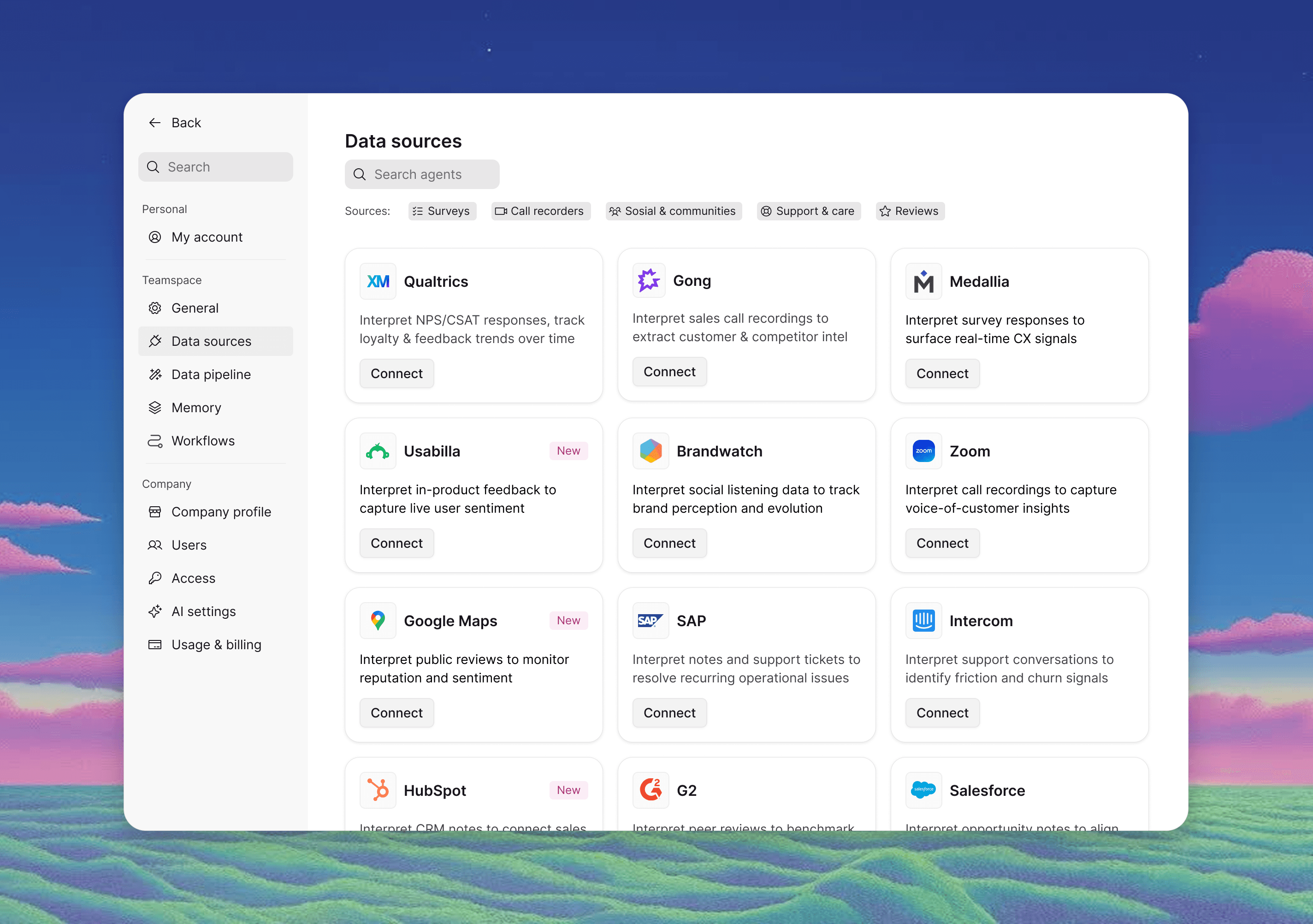
100+ source-native agents
Gong agent understands calls. Qualtrics agent understands surveys. Not generic data pipelines.

Every format, every language
Calls, surveys, reviews, tickets & social — in 100+ languages. Every signal atomized in its native format and language.

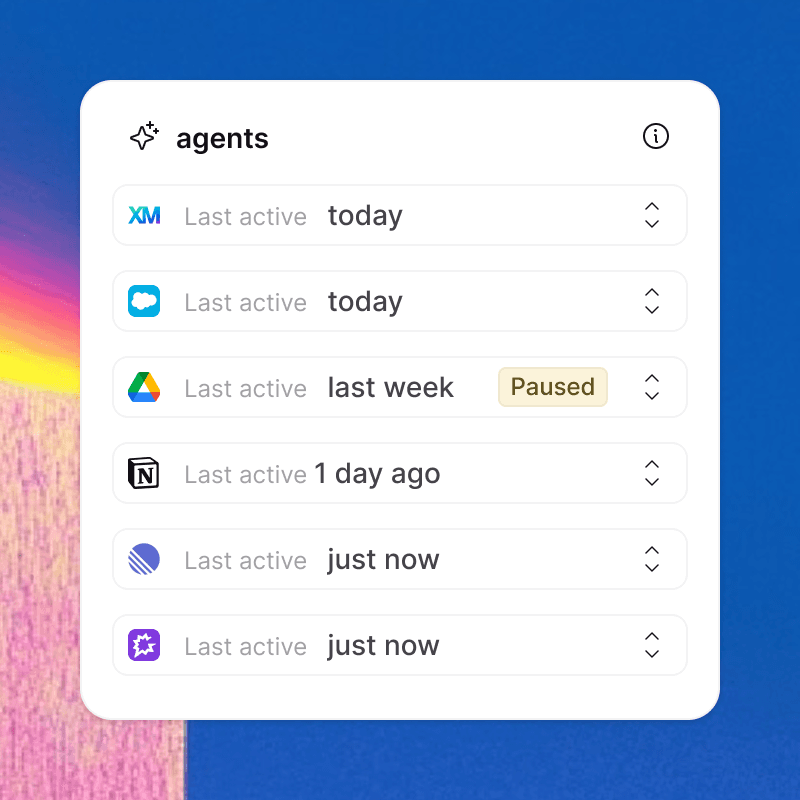
Always-on
Connect once. Agents encode continuously — every new interaction captured, atomized, ready for memory.
Consolidate your customer memory — agentically
Customer feedback is contradictory, nuanced, and context-dependent. Agents resolve contradictions, compress noise, and build a persistent customer memory — always learning, always current. The longer it runs, the sharper it gets.
Memory markers
Define how each memory is consolidated — by competitor, persona, products. Set manually or let the data shape them.

Data resolution
Conflicting and nuanced feedback resolved by context, recency, and source. Producing clarity, not averages.
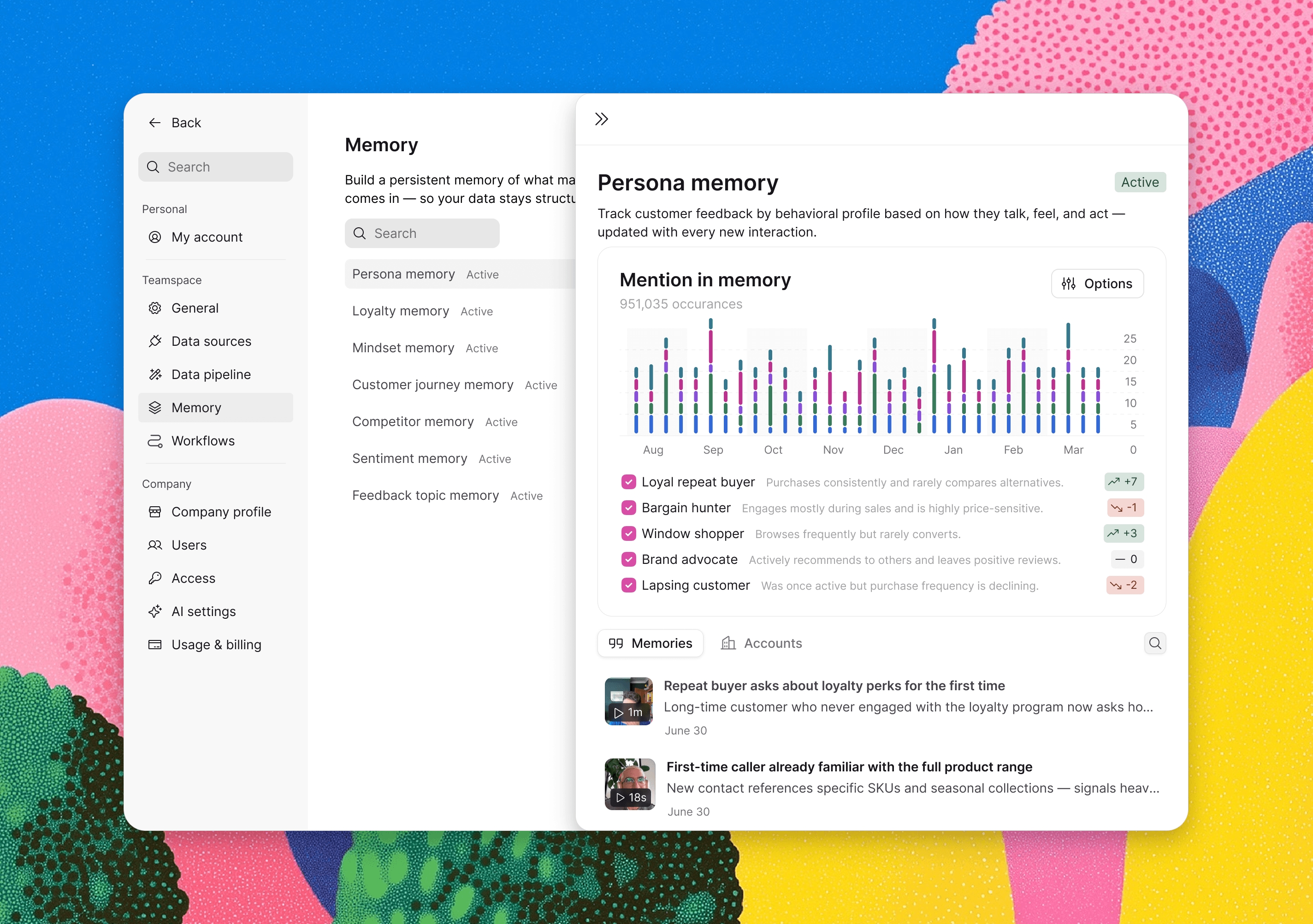
Memory at scale
Persona, competitor, journey, product, segment—distinct memories, updated continuously with every new interaction.
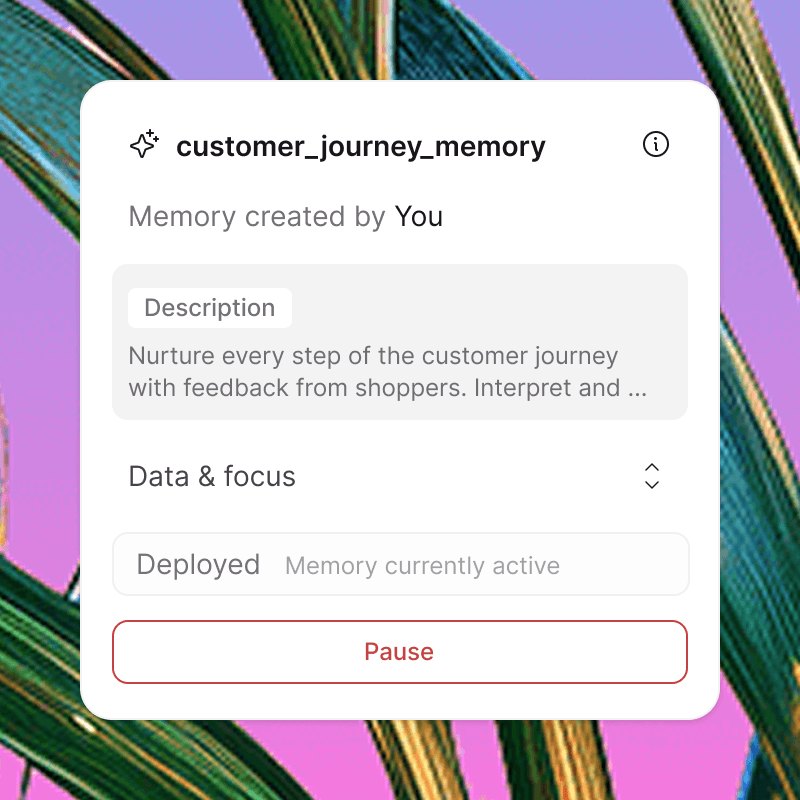
Recall customer intelligence in the context of your work
Customer memory tells you what customers say, need, and want. Your context — goals, roadmap, product, segment, and playbooks — tells it what to do about it. Together, they produce actions specific to your organization.
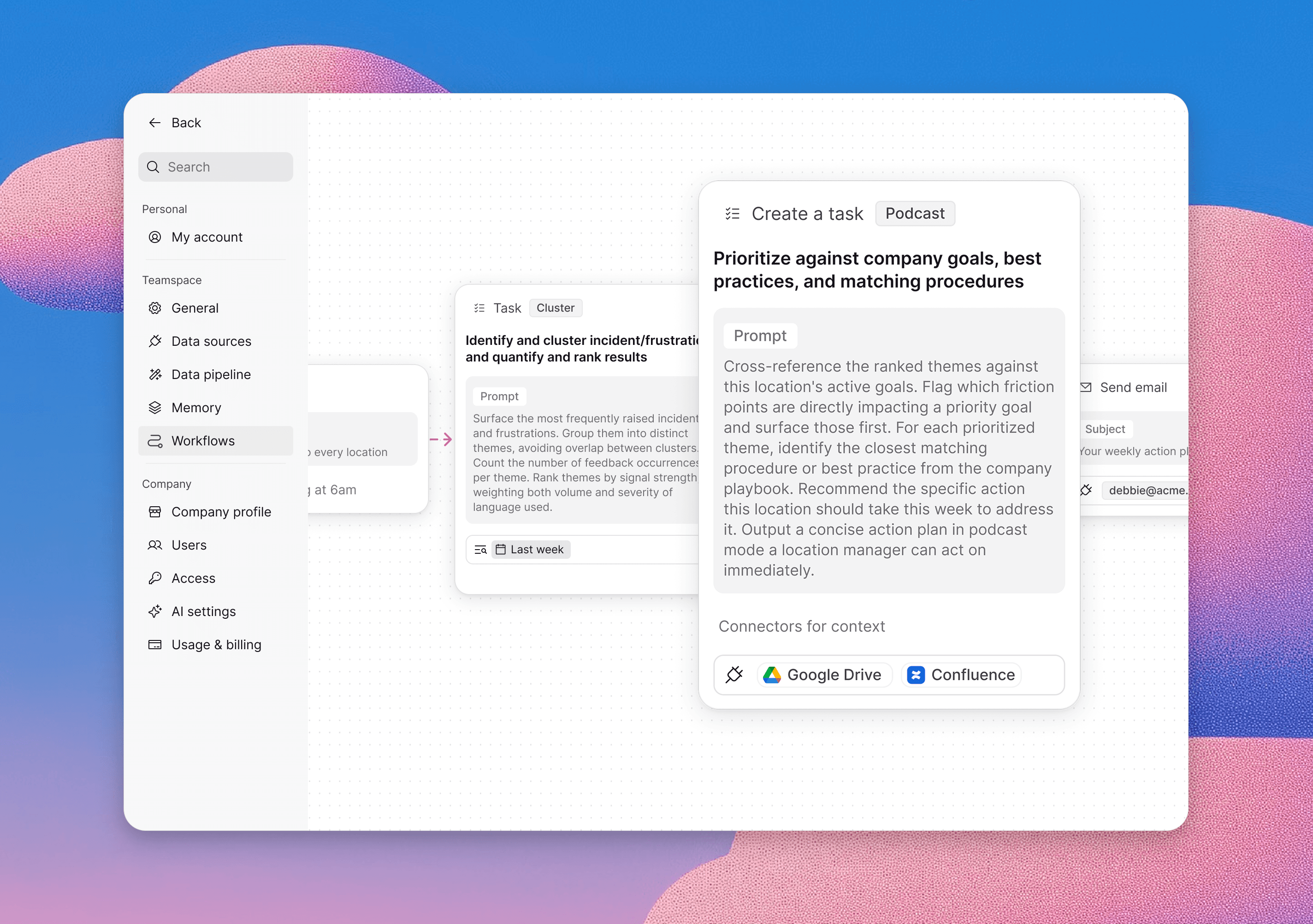
Business context
Your goals, products, journeys, and strategy — loaded and updated. The lens that makes every action relevant.
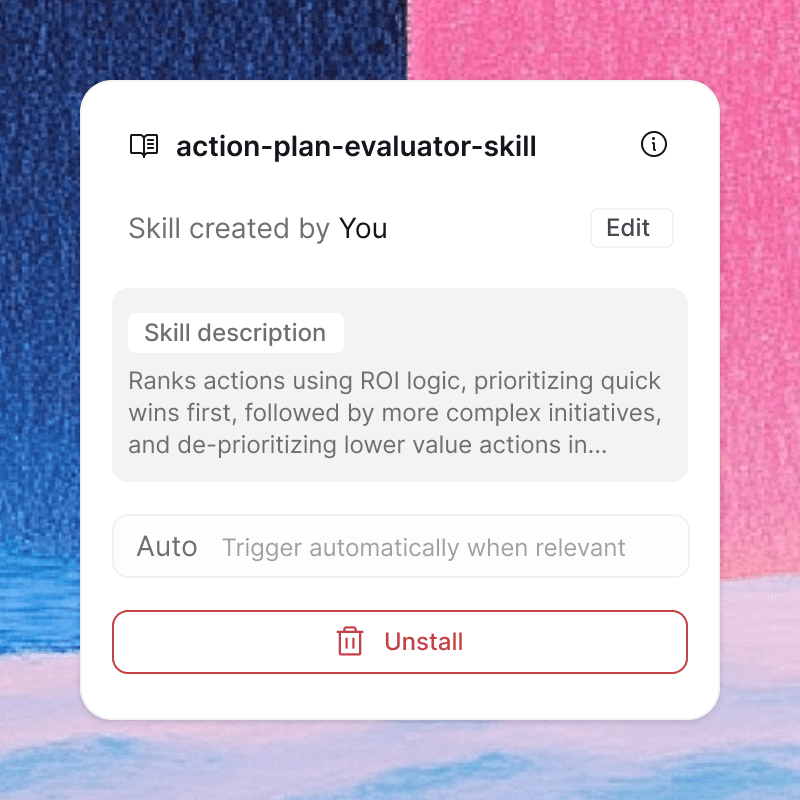
Skills and guardrails
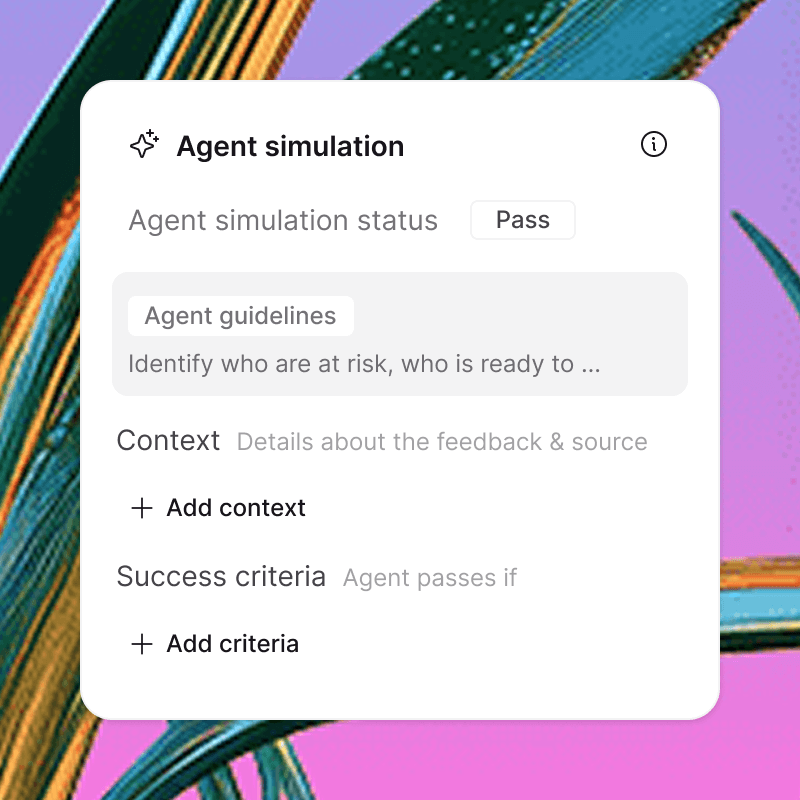
Define how memory is retrieved and trandformed. Set the rules, priorities, and reasoning that shape every output.
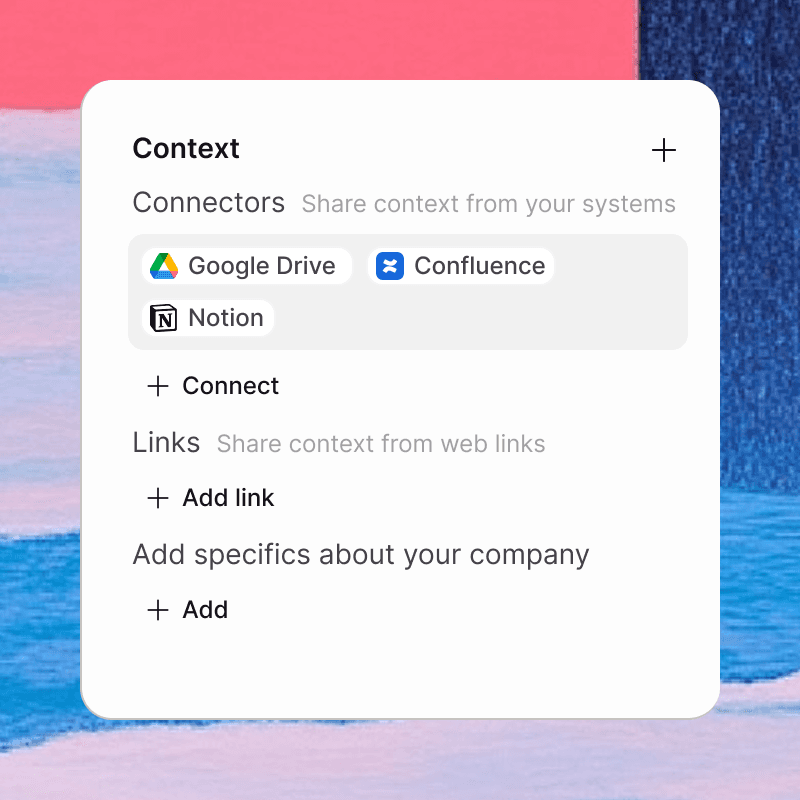
MCP and external context
Pull context from Databricks, Mixpanel, Drive, and more. Enrich customer memory with ops and product data.
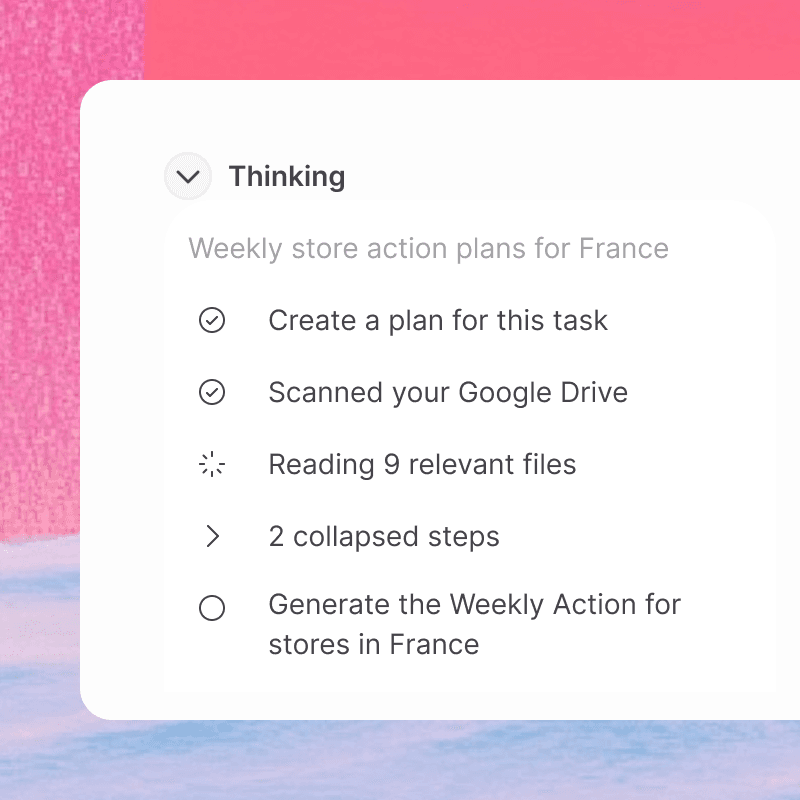
Put customer intelligence to work, at scale
Native agentic workflows that reason over consolidated memory and take action in the tools your teams use already.
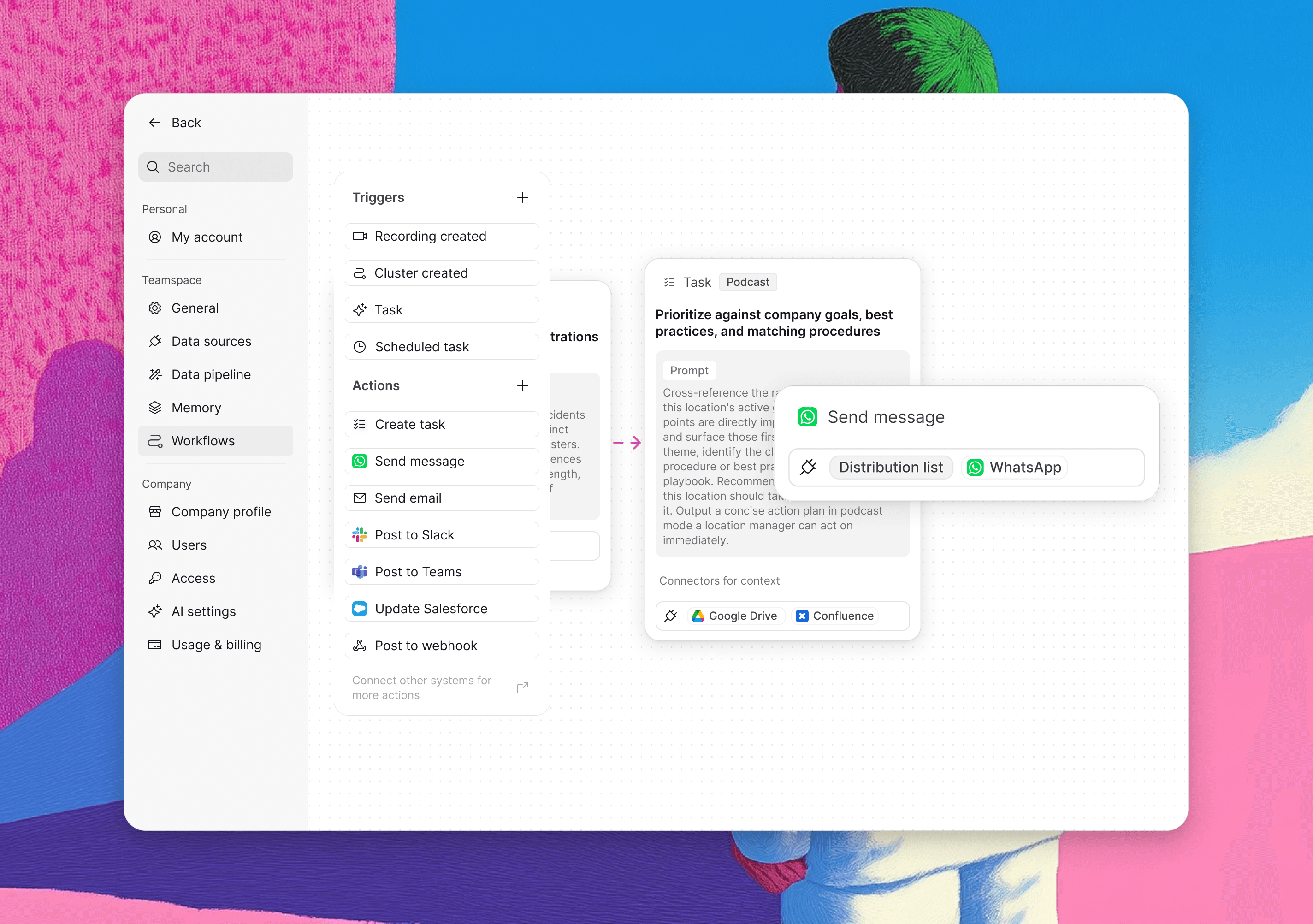
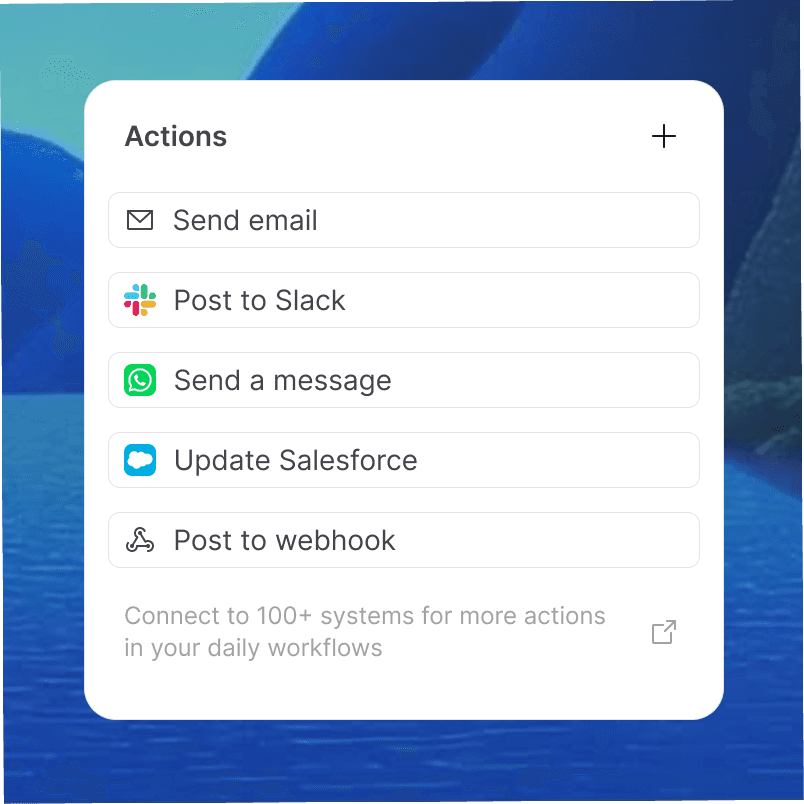
Autonomous workflows
Orchestrate once. Workflows deliver actions to Salesforce, Jira, WhatsApp, email, and more—scheduled or triggered.
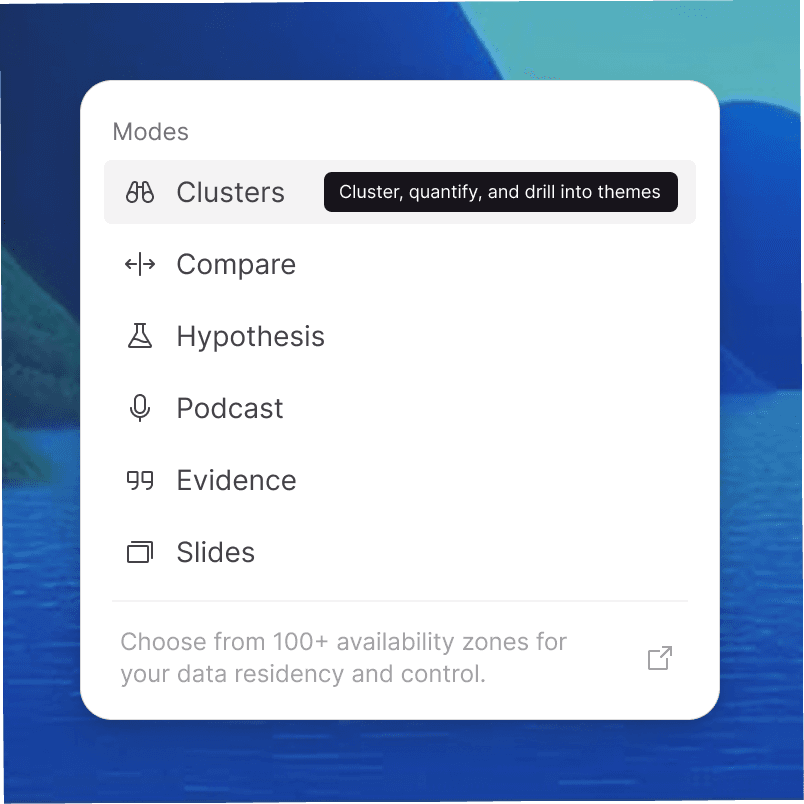
Modes
Choose how intelligence is delivered. Purpose-designed outputs for how teams consume and act on it.
Intelligence everywhere
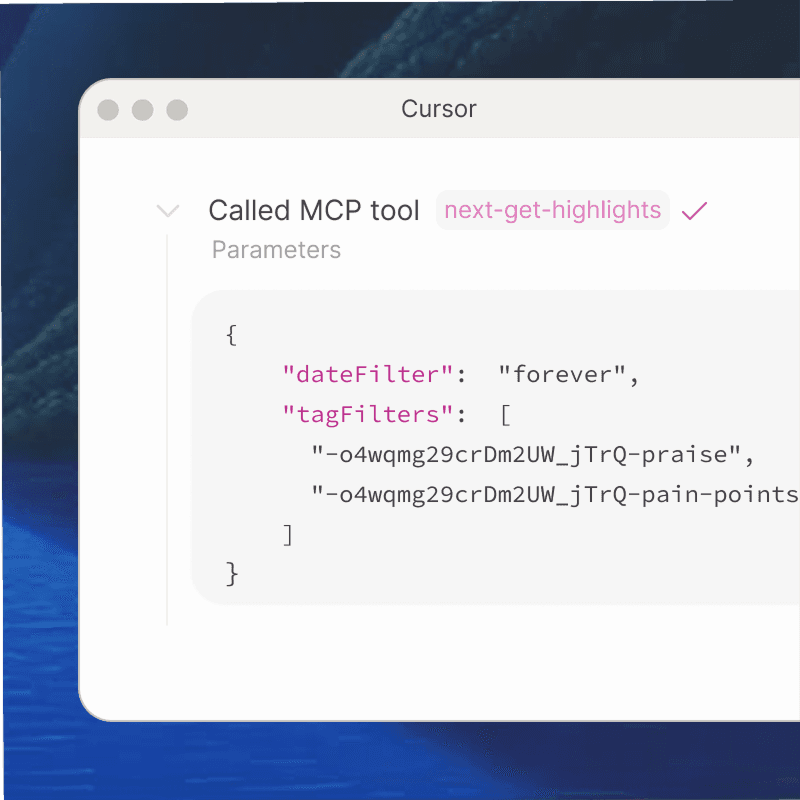
Access customer intelligence in Cursor, Claude, and internal tools via NEXT AI's MCP server. Open by design.
Trusted by teams that act on what customers say
Marketing, product, and CX teams that act on what customers say — every day.




























Your data. Your rules.
Designed to meet the security, privacy, and compliance requirements of the most demanding enterprises.
Total control of your data
Manage model access, data residency, MCP controls, privacy policies, integrations, and agent rules globally.

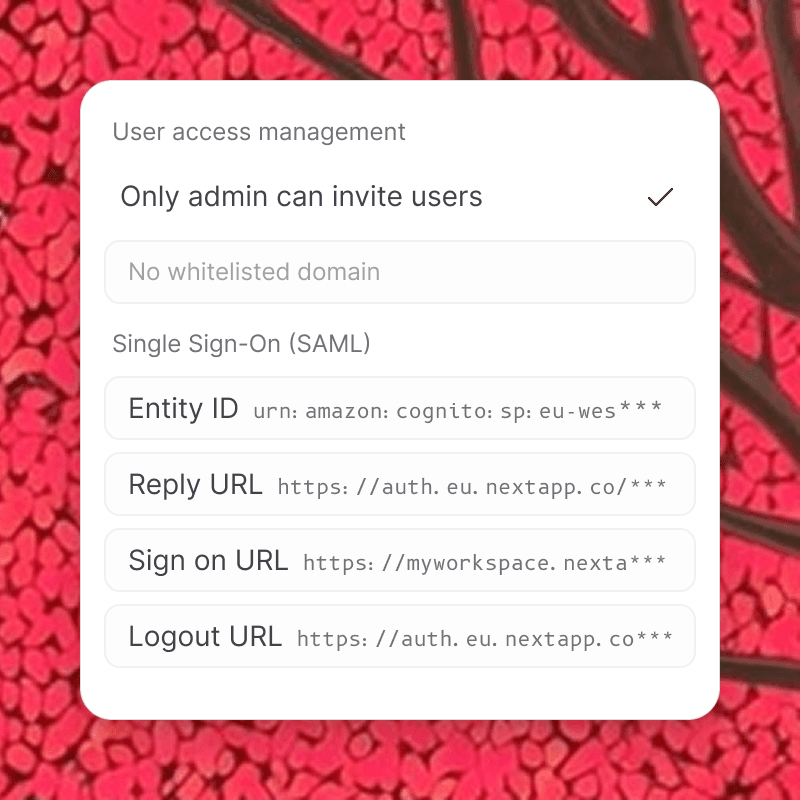
Identity and access management
SAML-based SSO for secure login. SCIM provisioning to manage users and groups automatically.
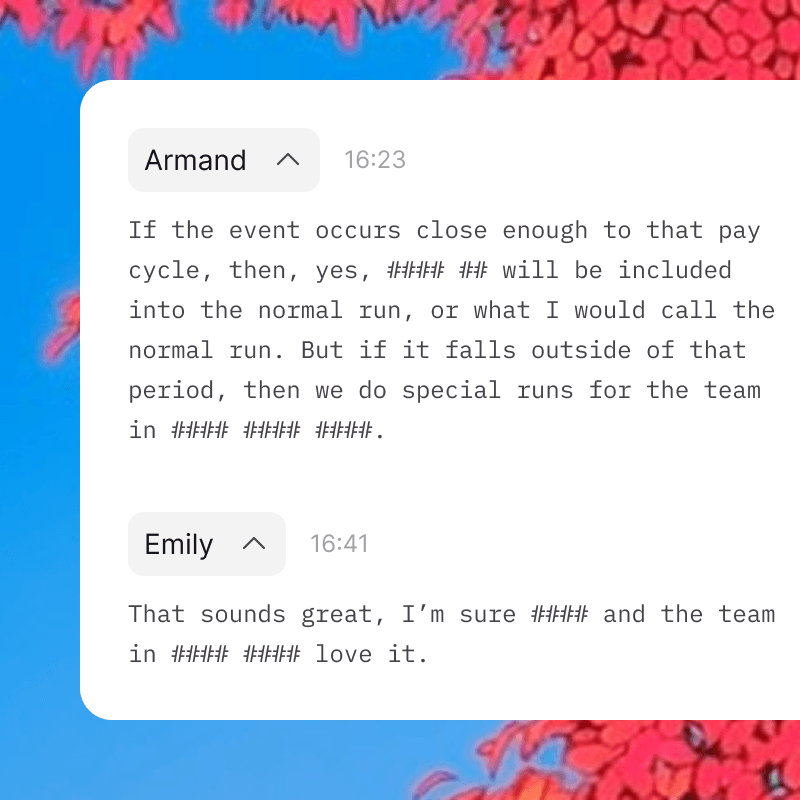
PII protection by default
Personally identifiable information is removed from your data automatically. The LLM never sees PII.
Dedicated guidance
Deploy AI at scale with professional expertise.
Deploy AI at scale with professional expertise.
Premium support
Forward-deployed resources guarantee your success.
Forward-deployed resources guarantee your success.
Zero data retention
No training on your data by NEXT AI or LLM providers.
No training on your data by NEXT AI or LLM providers.
Identity management
SAML-based SSO integration for secure user access.
SAML-based SSO integration for secure user access.
SCIM user provisioning
Easily create, update, and remove users and groups.
Easily create, update, and remove users and groups.
Centralized security controls
Configure model access, MCPs, and agent rules.
Configure model access, MCPs, and agent rules.
Global compliance standards
Compliant with the requirements of GDPR and CCPA.
Compliant with the requirements of GDPR and CCPA.
Third-party security certifications
SOC 2 Type 2 certified and penetration testing.
SOC 2 Type 2 certified and penetration testing.
Robust data protection
AES-256 encryption at rest and TLS 1.2+ in transit.
AES-256 encryption at rest and TLS 1.2+ in transit.
Questions & Answers
What is customer memory in AI?
What is memory consolidation in customer intelligence?
How does persistent customer memory work?
How does AI resolve contradictory customer feedback?
Why do RAG-based AI agents fail on customer data?
How do AI agents work with customer feedback?
What data sources can customer intelligence AI use?
How does business context shape AI-driven customer actions?
Questions & Answers
What is customer memory in AI?
Customer memory is a persistent, structured record of everything customers have said — built by resolving contradictions, compressing noise, and consolidating signals from every channel over time. Unlike a database that stores raw data, or a RAG system that re-queries raw data with every request, customer memory learns and gets sharper with every new interaction. It is analogous to how the human brain consolidates experiences — moving raw inputs from short-term to long-term memory, discarding noise, and preserving high-signal patterns.
What is memory consolidation in customer intelligence?
Memory consolidation is the process of resolving contradictions in raw customer feedback, compressing noise, and building a persistent customer memory in real time. The term is borrowed from neuroscience, where it describes the brain’s process of strengthening important patterns and discarding irrelevant detail. In customer intelligence, consolidation means that conflicting signals — a high NPS score alongside a frustrated verbatim — are resolved into a coherent understanding rather than stored as contradictory data points.
How does persistent customer memory work?
Persistent customer memory works through three steps: encode, consolidate, recall. Source-native agents encode signals from every channel — atomizing them into distinct data points and normalizing across sources without losing context. Memory agents consolidate these signals by resolving contradictions and updating the customer memory in real time. The system then recalls from consolidated memory — not raw data — through your business context to deliver actions. The memory compounds: the more interactions processed, the sharper it becomes.
How does AI resolve contradictory customer feedback?
AI resolves contradictory feedback through memory consolidation — identifying conflicting signals across sources, weighing them by recency, frequency, context, and source reliability, and producing a resolved understanding. When a customer gives an NPS of 9 but their call recording reveals pricing frustration, a consolidation layer recognizes both signals in context and updates the memory accordingly. Without this step, AI systems either average contradictions into meaningless output or ignore signals — both producing unreliable results.
Why do RAG-based AI agents fail on customer data?
RAG agents fail on customer data because they retrieve and reason over raw feedback with every query — and customer feedback is irreducibly contradictory. A RAG system has no mechanism to resolve conflicting signals, no persistent memory, and no ability to compound understanding over time. Each interaction starts from zero. For customer data specifically, where the same customer can express contradictory views depending on context and channel, this produces unreliable or shallow output.
How do AI agents work with customer feedback?
AI agents can work with customer feedback at three levels: encoding (capturing signals from each source in its native format), consolidation (resolving contradictions and building persistent memory), and recall (reasoning over memory to deliver actions). Most agent platforms operate only at the first level — connecting to sources and querying raw data. Without a consolidation layer, agents reason over contradictory data every time, leading to shallow analysis and high token costs.
What data sources can customer intelligence AI use?
Customer intelligence systems use source-native agents optimized for each data modality. Common sources include NPS/CSAT surveys (Qualtrics, Medallia), call recordings (Gong, Zoom), online reviews (G2, Trustpilot), support tickets (Zendesk, Intercom), social listening (Brandwatch), in-product feedback (Usabilla), CRM notes (Salesforce, HubSpot), and email. The key differentiator is how signals are encoded: source-native agents understand the structure of each channel, atomize signals into comparable data points, and preserve source context.
How does business context shape AI-driven customer actions?
Business context — your goals, roadmap, priorities, and organizational structure — acts as a lens that shapes what customer memory produces. Customer memory without context is not actionable. When context is applied, the same memory produces different actions for different teams: a store manager gets action plans aligned to quarterly KPIs, a product team gets backlog priorities tied to the roadmap, a marketing team gets campaign adjustments based on real customer language.